



An Empty Ghee Jar: A Simple Plan for Non-Food Reuse
Give an intact empty glass ghee jar a useful non-food purpose with a condition check, gentle cleaning, clear labelling and local recycling guidance.
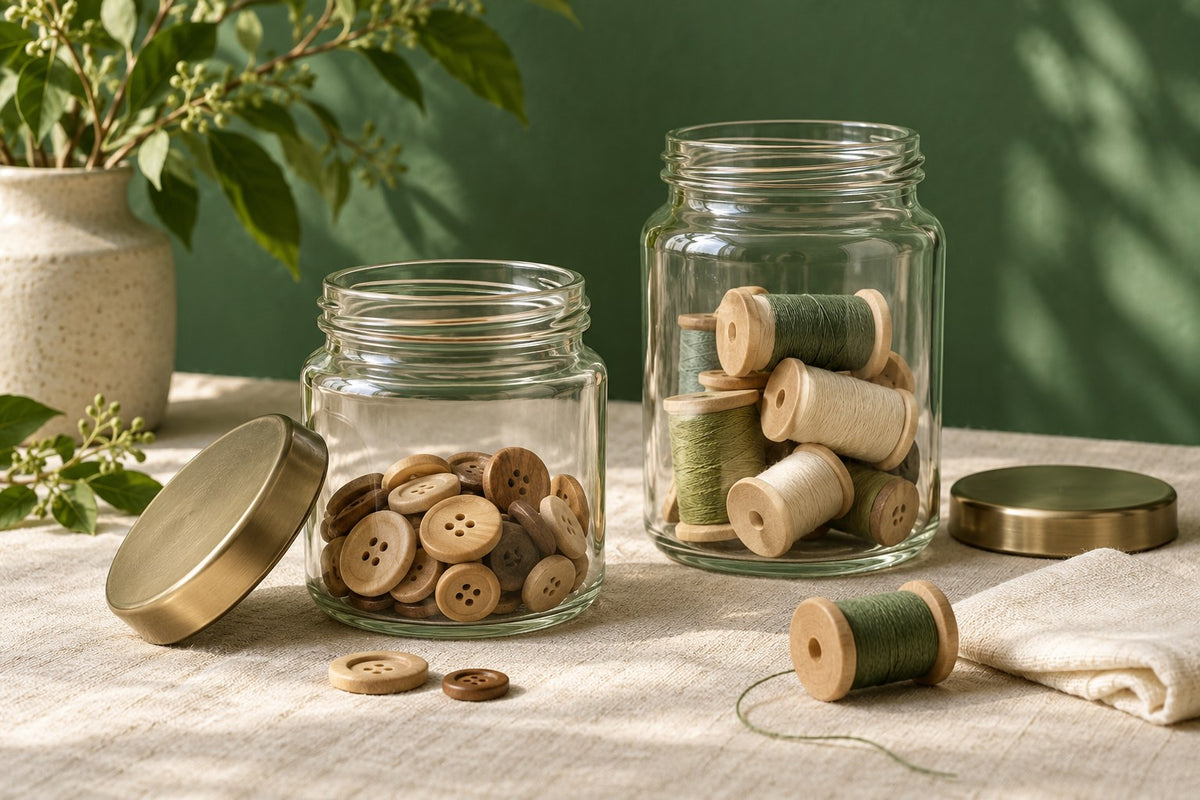
A clean, undamaged glass ghee jar can be useful for small, dry, non-food items. Start by checking the jar and its lid, follow any packaging-care instructions, and give it one clearly labelled new purpose. Do not assume that a food jar is suitable for an oven, freezer, candle or home-canning project.
If your regular ghee came in a glass jar, use the checks below for that actual container. Faimly Farm Shuddh Desi Cow Ghee belongs to our regular-ghee range; check its current pack options before ordering. These steps are not instructions for a steel can, plastic container or damaged glass.
First, decide whether the jar is worth keeping
Look at the empty jar in good light. Check the rim, threads, base and sides visually; do not run a finger along a suspect edge. Set aside a jar with a chip, crack or sharp edge instead of trying to repair it for reuse. Glass manufacturer Kilner also instructs users to inspect its jars for chips and cracks. Its guidance concerns its own products, but it is a useful reminder that appearance and condition matter.
| What you find | Practical next step |
|---|---|
| Intact glass, a sound lid and a purpose in mind | Clean it, dry it and label its new contents. |
| Chip, crack or sharp edge | Do not reuse; ask your local collection service how to handle damaged glass. |
| Rust, damage or a loose lining inside the lid | Do not rely on that lid. Reuse only if an appropriate replacement and safe purpose are available. |
| No useful destination for the jar | Check local glass-container recycling rather than storing an indefinite pile. |
Clean gently and let every part dry
- Empty the pack. Finish using the ghee according to the pack's food-storage instructions before starting the reuse project. This is not a method for recovering food from a damaged jar.
- Check the care information. Follow any instructions for the jar, lid, coating and seal. A lid may need different treatment from the glass.
- Use a gentle hand wash where permitted. Bring the empty jar to room temperature. Use mild washing-up liquid, comfortably warm water and a soft brush or sponge; rinse away the detergent. Avoid abrasive tools.
- Handle labels patiently. If the packaging instructions allow it, soften an ordinary paper label with the same warm washing water and lift it gently. Do not scrape the glass with a knife. Leaving a stubborn label in place is better than forcing it off.
- Dry separately. Leave the jar and lid open to dry fully before adding dry craft items. Check the threads and lid recess as well as the base.
Do not pour boiling water into an unidentified packaging jar or move it suddenly between very hot and cold conditions. Kilner's own preserve-jar care page warns against pouring boiling water directly into its jars and gives separate lid-care instructions. That does not establish dishwasher or heat suitability for a Faimly Farm pack; use the instructions for your actual container.
Choose one job outside the food cupboard
A small jar can organise spare buttons, short ribbon pieces or paper clips. Choose items you actually need to find together. Keep it on a stable shelf or inside a drawer, with heavier objects low down and small parts away from young children.
Cover the old food name with a clear contents label such as Buttons — non-food storage. If you want to retain the original artwork, add a prominent new label on the lid and keep the jar in a craft area. Do not use a former food jar for medicines, cleaning chemicals or other contents someone could mistake for food.
A simple label can record three things: contents, intended owner and storage location. For example: “Spare coat buttons · household repairs · sewing drawer.” Recheck the jar if it is dropped or knocked.
When recycling is the better choice
Ask your local municipal service or recycler whether it accepts glass food jars, how it wants lids separated, and what it requires for damaged glass. WRAP's Recycle Now guide distinguishes bottles and jars from items such as glass cookware and ceramics, and recommends emptying and rinsing containers. Its collection instructions are UK-specific; follow the rules where you live.
Questions about empty ghee jars
Can I turn the jar into a candle?
This guide does not recommend heating an ordinary packaging jar. Use a container specifically supplied and approved for that purpose.
Does washing make the jar suitable for canning or freezing?
No such suitability is established by washing. The jar, lid and intended process need appropriate manufacturer instructions.
Must I remove every trace of the original label?
No. For non-food organisation, a clear new contents label is more useful than aggressive scraping. For recycling, ask the collection service.
For more packaging context, read our guide to glass-jar packaging, or explore Ghee & Beyond.
Published by Faimly Farm. AI-assisted editorial guidance, checked against the linked sources on 21 October 2026. This article does not certify any jar for a new use; follow the instructions for the container you own.
Continue reading
View all stories
Savoury Bread Pudding with Ghee: Soak the Bread, Set the Centre
Make a small vegetable bread pudding and check the egg centre with a thermometer.
Read the story
Broccoli with Regular Ghee: Steam Briefly, Then Finish in the Pan
Cook even broccoli florets and finish with measured regular ghee without leaving water in the pan.
Read the story
Two Small Ghee Jars or One Large Jar? Compare the Household Fit
Compare equal total quantities by unit cost, storage and allocation without treating the cheapest unit as an automatic winner.
Read the story
Join the conversation