



Greasing a Cake Tin with Ghee: Corners, Lining and Release
Prepare a cake tin with regular ghee: thin coverage, corners, parchment and release. Follow recipe-specific directions and troubleshoot sticking.
By Faimly Farm, with AI assistance · Published 21 October 2026
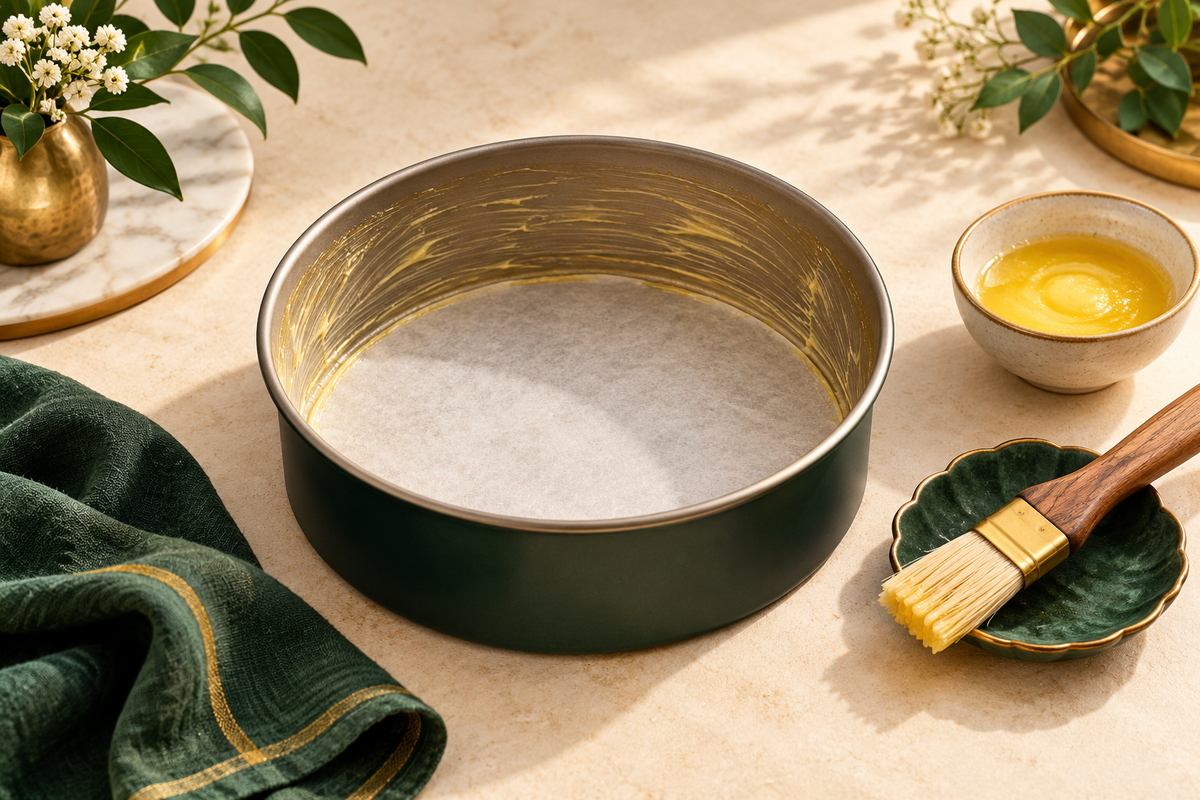
Grease a cake tin with a thin, continuous film of ghee, paying attention to the corners, then add the lining specified by the recipe. A puddle of fat is not more reliable than even coverage. Pan preparation and cake doneness are separate causes of a difficult release.
This guide is a regular-ghee kitchen technique, not a promise that every tin or batter needs the same preparation. Follow the baking recipe and pan manufacturer's directions first, particularly for silicone, shaped or coated pans.
Prepare the tin before mixing batter
Identify the base, sides, seams and any central tube. Check that the pan is clean and undamaged. Cut baking paper before mixing a batter that needs to go promptly into the oven. For a springform tin, do not assume the joint is liquid-tight.
Apply a controlled film
- Measure a small amount of regular ghee into a separate bowl so a flour-covered brush does not return to the jar.
- Use softened or just-fluid ghee and a suitable pastry brush or clean food-safe applicator. Avoid heating the pan merely to melt a large lump.
- Brush the base and the areas the recipe directs, including the junction of base and wall. Look across the surface under light for missed patches.
- Fit the cut paper smoothly. If the recipe calls for greasing over the paper or a light flour dusting, do that; otherwise do not add extra stages automatically.
- Remove any loose excess flour if dusting. Pour the batter in without dislodging the lining.
Match the method to the bake
A loaf often benefits from a paper sling that leaves handles for lifting. A round cake can use a fitted base circle. A detailed mould needs its recesses checked carefully. Some foam cakes require an ungreased surface to climb; greasing every cake pan as a universal rule would be a mistake.
For a hypothetical 20 cm round pan, record the ghee used for preparation separately from the ghee in the batter. Otherwise a nutrition or cost calculation may overlook the pan coating or count the full bowl even if much remains unused.
If the cake sticks
Check whether the cake was baked through, cooled for the recipe's stated interval and loosened appropriately. Turning a fragile cake out immediately and leaving another cake in the tin too long can create different problems. Do not pry a coated tin with a sharp metal knife; use tools permitted by its manufacturer.
Next time, photograph or sketch where sticking occurred and adjust that preparation point. Do not automatically double the ghee or conclude that one milk-source SKU is required.
Regular-ghee choice
Choose a verified culinary regular ghee you already use. This guide does not demonstrate that A2 sourcing produces a better release. The controlling task is even preparation compatible with the recipe and pan.
Questions bakers ask
Does parchment replace greasing?
It depends on the recipe and pan. A base liner does not cover bare sides or corners.
Should every sponge tin be greased?
No. Some recipes specify otherwise. Follow the particular method.
Can I use a puddle of melted ghee?
Spread a thin film instead; excess fat can collect unevenly.
Does sticking prove poor ghee quality?
No. Pan preparation, baking and cooling must be assessed separately.
Relevant product context
Faimly Farm Danedar Cow Ghee is a verified regular cow-ghee listing relevant to this culinary task. Choose by your preference and the current selected pack. This article does not demonstrate superior texture, health or performance, and does not independently validate purity, certification or health wording in the product listing.
Related Faimly Farm reading
- For parent baking technique, read Ghee in Cake Batter: Planning a Small Substitution Trial.
- For measure pan-coating fat, read How to Measure Ghee for Recipes: Grams, Spoons and Scaling.
- For compare a different baking dough, read Nankhatai with Ghee: Dough Texture and Baking Cues.
Sources and links checked 21 October 2026. This is educational editorial content; examples and proposed recipes are identified in the text. Banner: AI-generated illustration, not an actual product or tested-batch photograph. Return to the Faimly Farm Journal.
Continue reading
View all stories
Savoury Bread Pudding with Ghee: Soak the Bread, Set the Centre
Make a small vegetable bread pudding and check the egg centre with a thermometer.
Read the story
Broccoli with Regular Ghee: Steam Briefly, Then Finish in the Pan
Cook even broccoli florets and finish with measured regular ghee without leaving water in the pan.
Read the story
Two Small Ghee Jars or One Large Jar? Compare the Household Fit
Compare equal total quantities by unit cost, storage and allocation without treating the cheapest unit as an automatic winner.
Read the story
Join the conversation