



Before Sharing an A2 Ghee Study: Check for Corrections or Retraction
A practical check for updates to a cited research paper, with a record of the notice, its scope and the claim it affects.

Before relying on a paper cited for an A2 ghee claim, open its current publisher page and check for a correction, expression of concern or retraction. A downloaded PDF or screenshot may not show a notice added later.
This is a source-checking method, not an allegation about any particular ghee study, researcher or brand. Faimly Farm sells ghee, so apply the same scrutiny to research cited on our own website.
Identify the exact paper
Copy the title, authors, journal, year and DOI from the original reference. Search for that specific paper rather than a headline paraphrasing it. Confirm that the record you open matches the citation; a paper with a similar title is not an interchangeable source.
Write the seller's exact claim in a separate note. This keeps two questions distinct: what happened to the publication, and whether its findings support the statement being made about a food.
Look in three places
- The publisher's article page. Look for a linked notice, version information or an editorial update. Open the notice itself rather than relying on the label alone.
- PubMed, when the paper is indexed there. NLM links original article records to associated errata, retraction notices and expressions of concern. Its linked-citation policy explains these relationships.
- Crossmark, when provided. The button can lead to reported updates. Crossref explains that participating publishers report changes such as corrections and retractions, while noting that the button itself is not a guarantee.
Absence of a button or an unsuccessful search is not proof that a paper has no problems. Record where you checked and what you found, including the date, rather than writing “verified” without describing the check.
Read what the notice actually changes
| What you find | Your next step |
|---|---|
| A correction | Read which detail changed and whether the claim you copied depends on that detail. |
| An expression of concern | Read the stated concern and look for a later outcome; do not present the evidence as settled. |
| A retraction | Read the reason and stop presenting the original paper as unqualified support for the claim. |
The ICMJE recommendations describe expressions of concern while issues are investigated and say retraction notices should explain the reason. Do not infer misconduct from the mere existence of a correction or invent a reason that the notice does not give.
A useful record for a shared claim
Keep five fields: the claim, the original paper link, the notice link, what the notice says changed, and your check date. If you previously forwarded the claim, a correction message can link the notice and explain the specific uncertainty. Avoid replacing one sweeping headline with another.
For example, if a hypothetical correction changes a number used in a promotional calculation, revisit that calculation. If it corrects an author affiliation, do not automatically describe the numerical findings as withdrawn. These are illustrative reading situations, not reports about actual papers.
Publication status is only one check
A paper with no identified update still needs an assessment of its methods, relevance and limitations. In particular, the food studied must match the claim. Our systematic-review reading guide covers the question and foods included; this page addresses later publication notices.
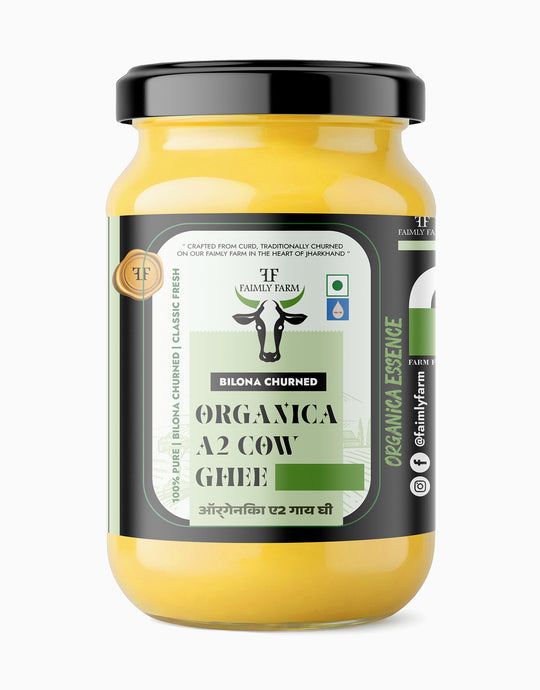
The current Organica A2 Cow Ghee Bilona Churned listing identifies an A2 cow-ghee product. That product identity is not clinical evidence, and this guide makes no nutrition-advantage or treatment claim for it.
Quick questions
Does a correction always invalidate the entire paper?
No automatic conclusion follows. Read its scope and how it affects the particular statement you are assessing.
Does this article identify a retracted A2 ghee trial?
No. It teaches a checking process and does not report a finding about a named trial.
Browse Health & Wellness.
Prepared by Faimly Farm with AI assistance. Sources and catalogue checked 24 October 2026. No clinical recommendation or expert review is claimed. Banner: AI-generated editorial illustration, not a real research record. Visit the Faimly Farm Journal.
Continue reading
View all stories
A Preprint Cited for A2 Ghee: Check the Version Before Sharing
A practical way to distinguish an early research manuscript from its later publication.
Read the story
A Systematic Review in an A2 Ghee Article: What to Check
Check the question, foods studied, comparison and limits in a systematic review cited for A2 ghee. Includes a practical reading worksheet.
Read the story
Eggless Ghee Dough Still Contains Raw Flour: Wait to Taste
An eggless biscuit mixture still needs its flour cooked. A practical routine for mixing, baking and checking flavour afterwards.
Read the storyExplore Faimly Farm ghee
Join the conversation