



Peas Pulao with Ghee: Keeping the Grains Separate
A small stovetop peas pulao with measured water, frozen-pea guidance and texture troubleshooting.
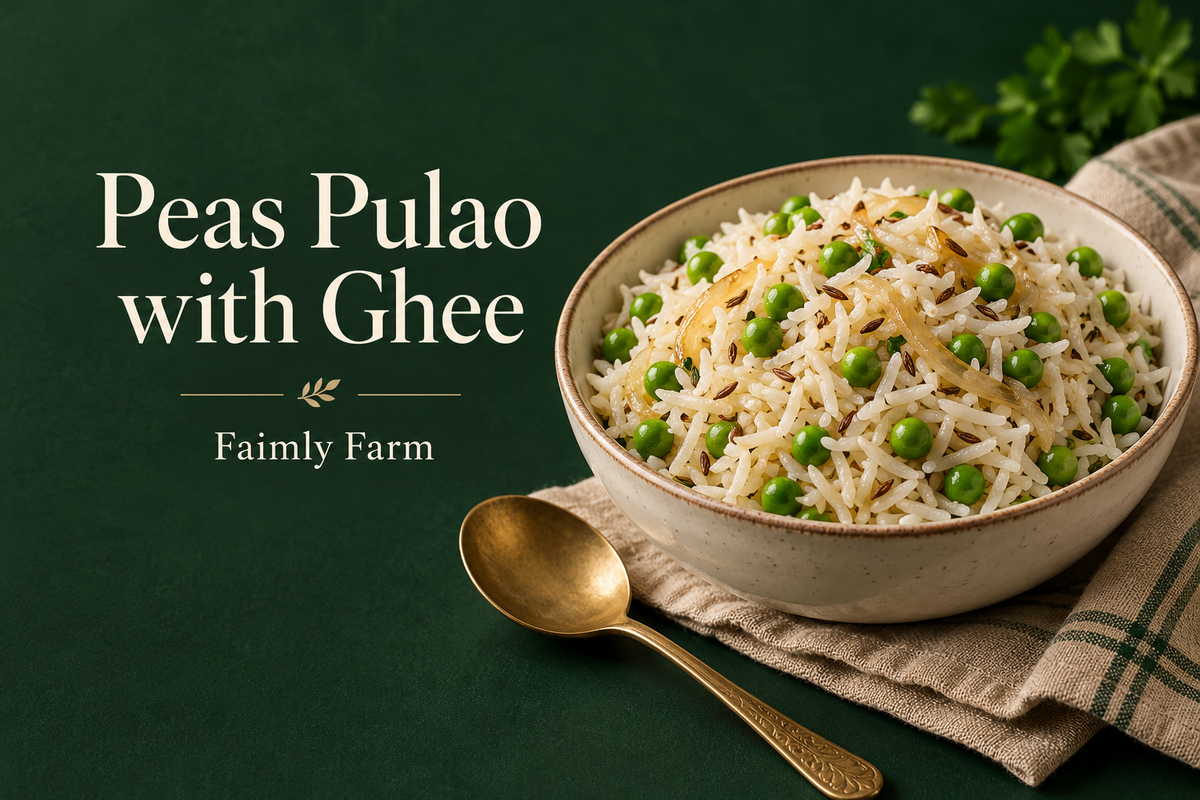
By Faimly Farm · 20 October 2026
For peas pulao with separate grains, rinse and drain the rice, measure the cooking water, simmer gently under a close-fitting lid and rest the pot before fluffing. Ghee supplies flavour; adding more cannot repair rice that has absorbed too much water.
This small stovetop matar pulao uses basmati, peas and a modest onion-and-cumin base. It serves two as a side dish. Allow around 45 minutes including soaking and resting; use the texture checks below rather than treating the timer as a guarantee. This is an original editorial recipe, not a claim of kitchen testing.
Ingredients and pan
- 150 g ordinary white basmati rice, not instant or brown rice
- 100 g shelled fresh or frozen peas
- 12 g ghee
- 1 small onion, about 60 g, thinly sliced
- ½ teaspoon cumin seeds; 1 small bay leaf, optional
- ½ teaspoon finely grated ginger
- 250 mL hot water as a starting point for soaked, well-drained rice; check your rice packet's absorption instructions
- ¼ teaspoon salt initially, then adjust to taste
Use a heavy saucepan about 16–18 cm wide with a close-fitting lid. Here a teaspoon is 5 mL. Weigh the ghee rather than treating millilitres as grams; our ghee measurement and scaling guide explains the difference.
Prepare the rice and peas separately
Rinse the rice gently in several changes of water, then soak for 20 minutes and drain thoroughly. Do not count the soaking water as cooking water. Use the same draining routine when repeating the recipe so an extra pool of water does not enter unnoticed.
For frozen peas, keep them frozen until needed and remove loose ice crystals. Add them during the cooking sequence below, not straight into hot fat on their own. Follow their packet's cooking directions. If fresh peas are large or firm, cook them separately until tender and fold them into the finished rice; otherwise their cooking time may not match the rice.
Stovetop method
- Soften the onion. Melt the ghee over medium-low heat. Add cumin and the optional bay leaf. When fragrant, add the onion and cook gently for about 5–7 minutes, stirring until soft with light golden edges. Avoid blackened spices.
- Add ginger and rice. Stir in ginger for about 30 seconds. Add the drained rice and fold gently for a minute. Coat the grains without pressing or aggressively stirring them.
- Add water before frozen peas. Carefully pour in the measured hot water, then add tender fresh peas or frozen peas and salt. Stir once to distribute. Let the pot return to a gentle boil before covering; cold peas will temporarily reduce the temperature.
- Simmer quietly. Cover and lower the heat. Begin checking around 12 minutes; the rice may need closer to 15 minutes or the time specified for your rice. Avoid repeatedly lifting the lid. The grains should be tender and free water should no longer pool at the base.
- Rest, then lift. Switch off the heat and rest covered for 10 minutes. Remove the bay leaf and gently lift the rice with a fork or broad spoon. Fold in any separately cooked peas. Serve promptly.
Choose the correction that matches the problem
| What you find | What to do | What to change next time |
|---|---|---|
| Firm rice with a dry base | Add 1 tablespoon hot water around the edges, cover and cook gently for a few minutes; check again. | Record the extra water and check for a loose lid or excessive heat. |
| Tender rice with visible water | Uncover briefly on low heat to let excess steam escape. Do not stir hard. | Reduce the starting water slightly and drain soaked rice consistently. |
| Soft, broken grains | Stop cooking and handle gently; extra ghee cannot rebuild them. | Check the rice type, water quantity and stirring. |
| Rice ready but peas too firm | Cook the peas separately rather than overcooking the whole pot. | Use tender peas or the separate-cooking option. |
Keep notes on your rice brand, pan, water and result. A universal ratio cannot account for every rice type and lid. For more dishes, use our cooking-with-ghee recipe index. If you want a dish based on already-cooked rice instead, see lemon rice and its off-heat lemon finish.
Choosing ghee for this recipe
Choose a ghee whose flavour you enjoy. Faimly Farm Desi Danedar A2 Cow Ghee is one cow-ghee option to consider; check its current pack information before buying. This recipe does not establish that one SKU, breed or A2 label gives better grain separation. That outcome depends on the rice and cooking method. Ghee is milk-derived, so this is not a dairy-free recipe.
Leftovers: cool quickly and reheat once
The UK Food Standards Agency advises chilling leftover rice quickly, ideally within one hour, in smaller portions rather than leaving the cooking pot to cool. Refrigerate and use within 24 hours; reheat only once, until steaming hot throughout. Ghee does not make rice left at room temperature safe.
Quick questions
Why does pulao become sticky?
Too much water, overcooking or rough stirring can leave soft, broken grains. Check the rice's instructions and record the water used before blaming the ghee.
Can I use frozen peas?
Yes. Add them after the water, let the pot return to a gentle boil and ensure they cook through according to the packet.
Can more ghee fix wet rice?
No. Correct the water and cooking problem. Extra fat is not a substitute for controlled absorption and resting.
Can I use a pressure cooker?
This method is for a covered stovetop saucepan. Use a pressure-cooker-specific recipe and your appliance instructions; do not transfer the water or timing unchanged.
Food-safety reference checked 20 October 2026: Food Standards Agency: Home food fact checker, rice, updated 21 August 2026. Prepared with AI assistance. Banner: AI-generated illustration, not a photograph of a tested batch.
Continue reading
View all stories
Scrambled Eggs with Ghee: Gentle Heat and Fully Set Curds
A two-egg recipe using measured ghee, gentle folding and controlled pan heat, with troubleshooting and clear egg-safety guidance.
Read the story
Ghee Cost per Recipe: A Kitchen Worksheet for Shared Meals
Calculate the ghee cost of a recipe and each portion using matching units, a worked example and a simple worksheet. Separate costing from nutrition.
Read the story
French Toast with Ghee: Set the Egg Centre Before Browning Too Far
Cook French toast with ghee while controlling soak time and pan heat. Check the egg centre, avoid overbrowning and follow safe handling guidance.
Read the storyExplore Faimly Farm ghee


Join the conversation