



Skillet Garlic Naan with A2 Cow Ghee: Roll, Cook and Brush
Make a yoghurt naan in a skillet, applying garlic ghee after cooking rather than burning garlic in the pan.
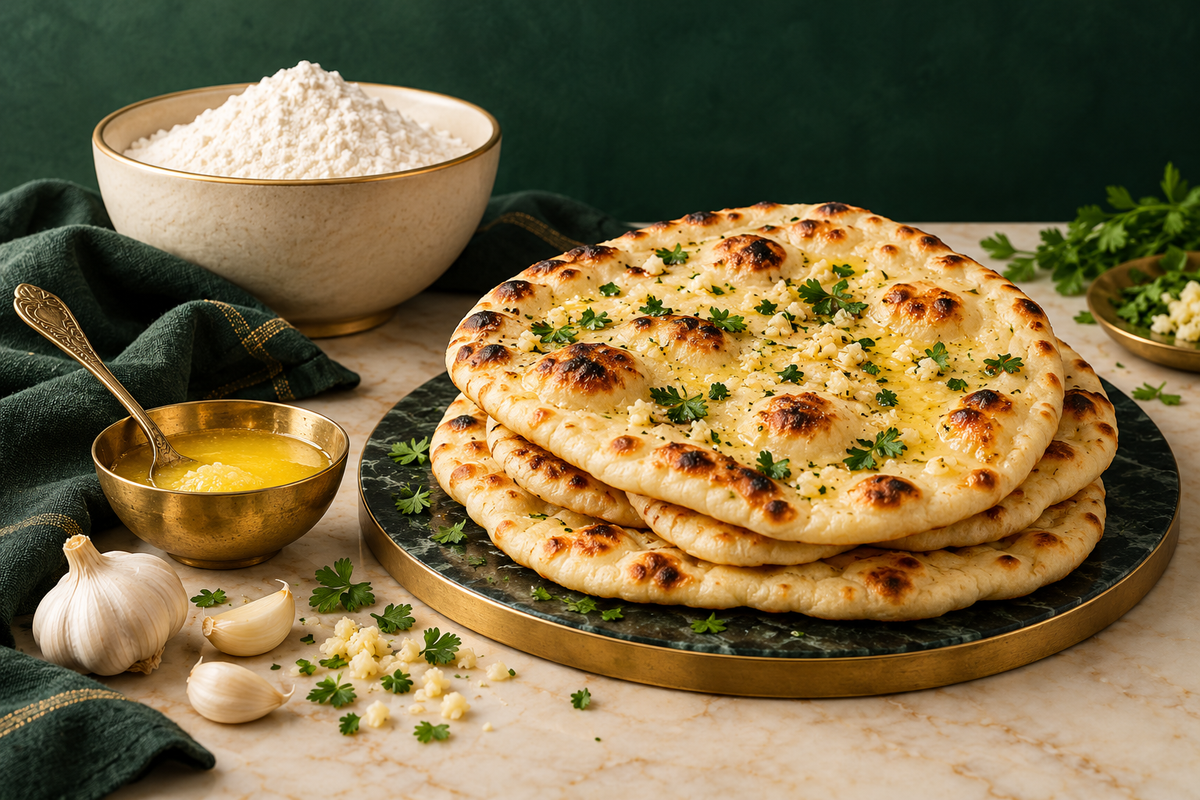
By Faimly Farm · 22 October 2026 · Prepared with AI assistance; no firsthand product testing or expert review is claimed.
For skillet garlic naan, cook the bread first and brush on garlic-infused A2 cow ghee after it leaves the pan. This keeps small garlic pieces away from the hottest dry surface while letting you control the amount on each naan. This is a proposed home-kitchen recipe, not a firsthand tested recipe. A2 describes the chosen ghee's source positioning; it does not guarantee softer bread.
Ingredients for four small naan
- 200 g plain flour, plus a little for rolling
- 80 g plain yoghurt
- 60–80 mL water, added gradually
- 1 teaspoon baking powder and ¼ teaspoon salt
- 15 g A2 cow ghee for finishing
- 1 small garlic clove, finely grated; optional chopped coriander
Use a heavy skillet whose manufacturer permits cooking flatbreads on a dry surface. Have a lid or clean cloth ready for the cooked bread. Do not use a non-stick pan at an unapproved empty-pan temperature.
Mix, rest and roll
- Combine flour, baking powder and salt. Add yoghurt and 60 mL water; mix into a soft dough. Add the remaining water a teaspoon at a time only if dry flour remains. Different flour and yoghurt need different amounts.
- Knead gently until cohesive. Cover and rest for about 20 minutes. Divide into four pieces.
- Roll each piece into an oval roughly 4–5 mm thick, using only enough flour to prevent sticking. Thick edges need longer cooking than thin centres, so aim for an even sheet.
Cook the centre before chasing dark spots
Heat the skillet over medium heat. Lay in one naan. When bubbles rise and the underside has brown patches, turn it. Cook the second side until the centre is set rather than wet or doughy; reduce heat if the outside darkens too quickly. Times vary with pan and thickness. Inspect the first naan by tearing it open, then adjust the next three.
Meanwhile gently warm the measured ghee and garlic in a small saucepan, stirring until the garlic loses its raw aroma without browning. Remove from heat. Brush a little onto each cooked naan and add coriander if wanted. Serve promptly. Do not leave the garlic mixture standing around for later use.
Troubleshooting one variable at a time
A sticky dough needs a short rest before more flour is added. A dry, cracking edge suggests too little water or excessive rolling flour. A burnt exterior with a doughy middle needs lower heat or a thinner roll. Extra ghee on the surface cannot correct an uncooked centre.
Quick questions
Why brush after cooking?
It lets you distribute a measured finish and keeps grated garlic off the dry pan.
Does A2 make naan rise?
No rise advantage is established here. This dough uses baking powder and careful cooking.
Can I eat a little raw dough to check seasoning?
No. Flour is a raw food; cook the dough before eating.
Food-safety reference checked 22 October 2026: FDA guidance on handling flour safely.
Relevant Faimly Farm option
Organica A2 Cow Ghee Bilona Churned is a current A2 cow-ghee listing relevant to this ingredient choice task. Select the actual pack and read its current label and checkout details. Faimly Farm sells this product; this article does not independently verify its marketing claims or establish a health or performance advantage.
Continue with related guides
- How to Measure Ghee for Recipes: Grams, Spoons and Scaling — parent framework for this task.
- Besan Chilla with A2 Cow Ghee: Spread a Thin, Even Pancake — related practical background.
- Baked Whole-Wheat Crackers with A2 Ghee: Roll for Even Crispness — related practical background.
Catalogue and linked records checked 22 October 2026. Banner: AI-generated editorial illustration. Return to the Faimly Farm Journal.
Continue reading
View all stories
Savoury Tart Dough with A2 Ghee: A Small Shortcrust Trial
Make a small savoury tart shell, controlling water and avoiding a universal butter replacement ratio.
Read the story
A2 Ghee Waffles: Start with the Waffle Maker's Instructions
Prepare a small waffle batter and adjust filling and release to the appliance.
Read the story
Semolina Appe with A2 Cow Ghee: Small Moulds, Cooked Centres
Cook a semolina-yoghurt batter in an appe pan without overbrowning the outside.
Read the story
Join the conversation