



Moving a Family Ghee Recipe to Induction: Keep a Change Log
Preserve the original family instructions while recording the pan, heat cues and timing of a modern induction adaptation.
By Faimly Farm · 22 October 2026 · Prepared with AI assistance.
Keep the original recipe and make a separate induction version. “Medium flame for five minutes” is a memory of a particular stove and pan; copying the same time onto a new hob does not document the same cooking conditions. Record what changes instead of silently rewriting the family note.
Check the pan before translating the heat
Bosch explains that induction cookware needs a suitable magnetic base and suggests checking whether a magnet attaches to the bottom. Read the cookware and hob instructions as well: the base size and the appliance's detection requirements matter. See Bosch's induction cookware guidance. An inherited pot may remain valuable as a family object even if it is not suitable for the new hob.
Record the pan's base diameter and material from its documented specification where available. Do not identify an unknown metal merely by its colour. Use a compatible pan in sound condition rather than assuming an old rounded vessel will work.
Translate instructions into observable cues
| Original wording | What to document in the adaptation |
|---|---|
| “Heat the ghee” | Amount, pan used, starting setting and whether the ghee has fully melted. |
| “Let the cumin crackle” | When gentle sizzling begins, seed colour and the next ingredient added. |
| “Cook until ready” | A specific cue such as a tender potato centre or a thickened consistency. |
These examples are editorial prompts, not a tested recipe. Follow the actual dish's safe method and the appliance manual. Do not use an empty-pan maximum-power experiment to find a substitute for an old flame setting. There is no universal conversion from a gas knob position to an induction number.
Use a one-change-at-a-time record
- Copy the original wording with its source and any uncertain words intact.
- Write the recipe quantity, pan and hob model for the modern version.
- Record the initial setting and the observed cue that prompted a change.
- Note the actual elapsed time separately from the family recipe's estimated time.
- Write what you would change next time. Avoid altering pan, batch size and ingredient quantities all at once if you want to understand the difference.
Name the current ingredient honestly
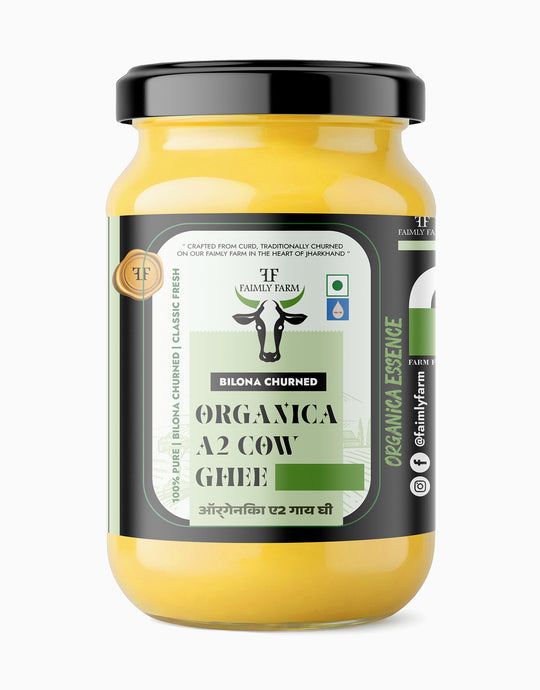
If you choose Organica A2 Cow Ghee Bilona Churned for the modern version, record that exact current ingredient in the adaptation. This identifies the verified A2 product recommended here. It does not establish that the historical family recipe used A2 ghee, and no nutritional advantage follows from this editing exercise.
A useful heading is “Current induction adaptation, recorded on [date].” Beneath it, keep “Original family wording” as a separate section. If a relative supplies a correction later, preserve the earlier record and date the correction instead of erasing the trail.
Quick questions
Can I retain the original cooking time?
Keep it in the source record. Treat it as a starting reference in the adaptation, checking the dish's actual doneness cues.
Does changing the stove make the old recipe wrong?
No. It creates a new cooking context that deserves clear notes.
Continue with recording family-recipe ghee quantities and browse Tradition & Culture. Equipment guidance checked 22 October 2026.
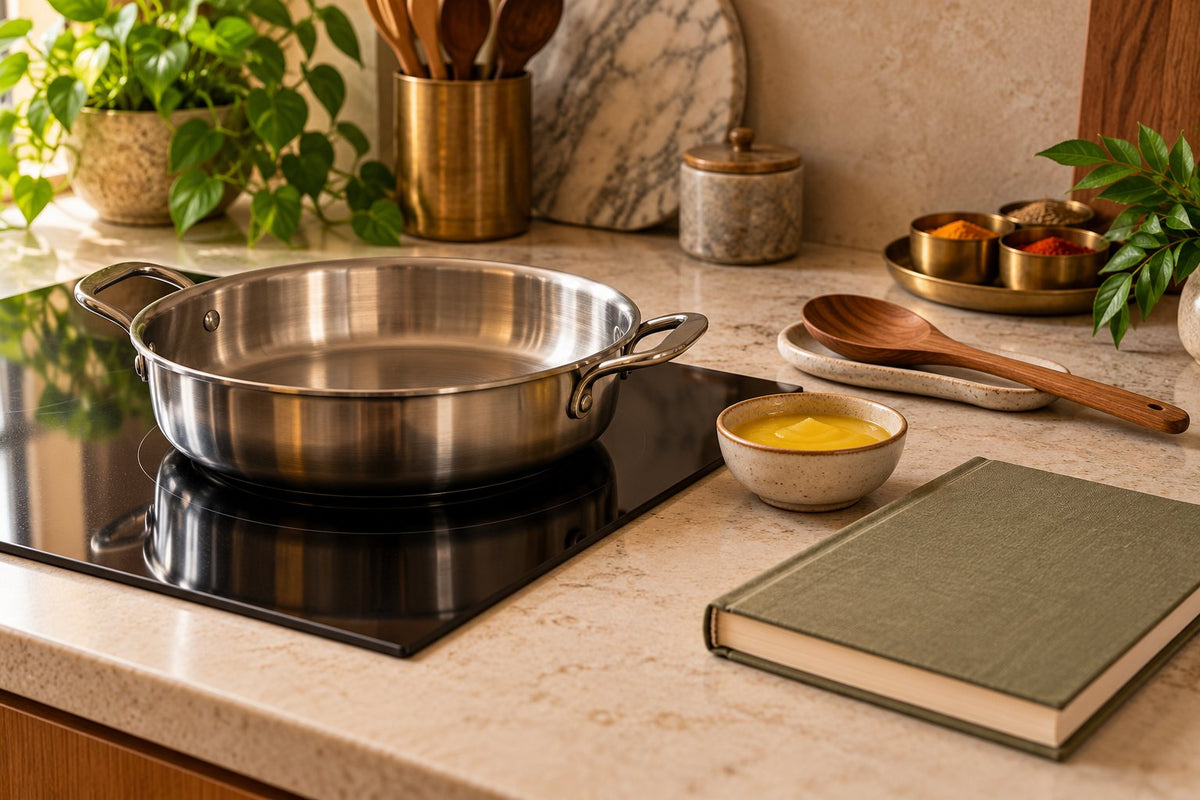
Banner: AI-generated editorial illustration. No firsthand product, kitchen or equipment testing is claimed. Visit the Faimly Farm Journal.
Continue reading
View all stories
Hand-Churned or Machine-Churned A2 Ghee: Ask about the Actual Step
Distinguish churning power from starting material and later clarification; ask stage-specific process questions.
Read the story
Edible Ghee and Puja Ghee: Keep Kitchen and Ritual Products Separate
Choose ghee by its stated use. A household checklist for distinguishing regular edible ghee from non-edible ritual products and keeping the jars, spoons...
Read the story
A Homemade Bilona Ghee Batch Diary: Record Inputs and Yield
Keep a homemade bilona ghee batch diary with inputs, butter mass, final yield and observations. Use clear units without treating records as certification.
Read the storyExplore Faimly Farm ghee
Join the conversation