



Cooking with Ghee in Enameled Cast Iron: Control the Heat
A manual-first guide to gradual heat and recipe fat in enameled cast iron, without borrowing instructions from a different cookware surface.
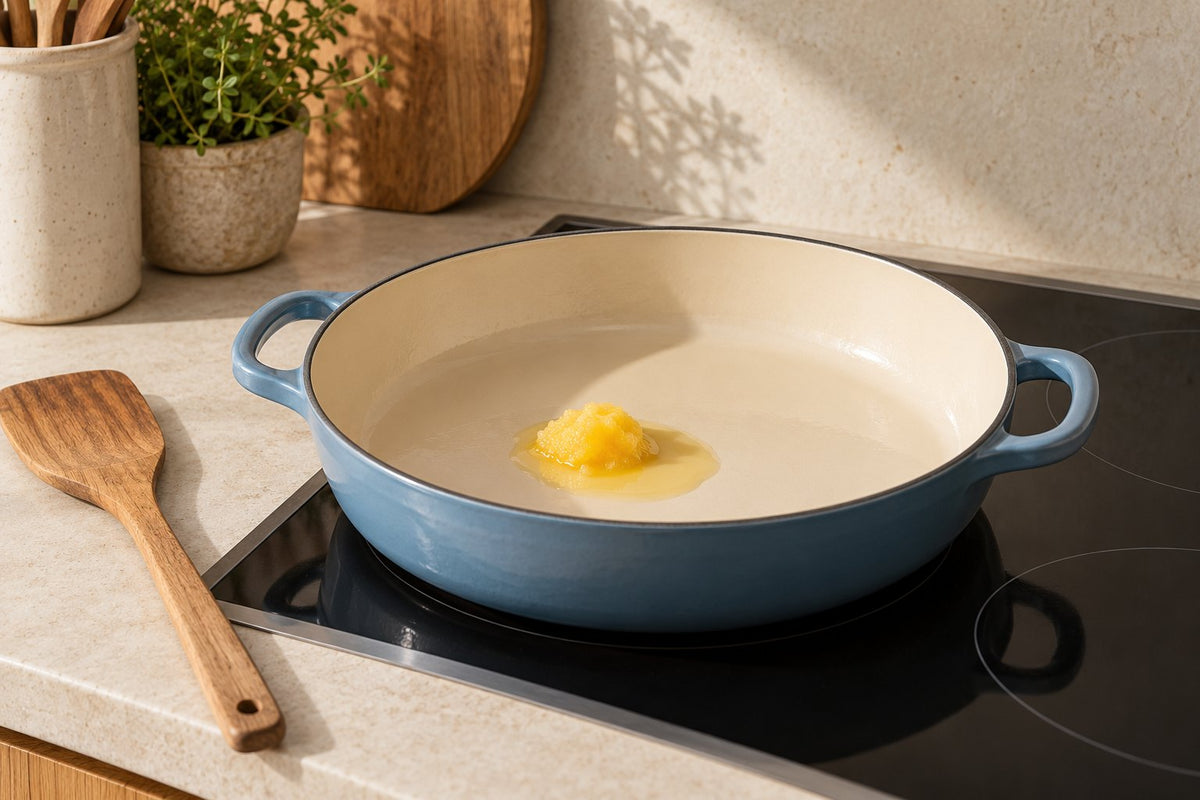
When cooking with ghee in enameled cast iron, set the heat according to the cookware instructions and the recipe—not an assumed smoke point. A cooking fat does not cancel the limits of the pan, lid, knob or handle.
Read the right section of the manual
Le Creuset's current Enameled Cast Iron care guidance calls for gradual heating and cooling and low to medium heat. It warns against rapid heating and maximum/high settings. It also allows dry cooking when done correctly under its stated low-to-medium-heat instructions. Therefore, a blanket claim that every enameled pan must never be used dry would misstate this source.
Those directions concern that manufacturer's cookware. For another brand or model, find its own manual. On a long care page, confirm the section heading: instructions for non-stick aluminium, stainless steel, stoneware and enameled cast iron are not interchangeable.
Make a short setup note
- Write down the pan model and cooking-surface type.
- Check that the planned hob or oven method is allowed.
- For oven use, check the actual lid, knob and handle combination, not just the metal body.
- Measure the recipe's ghee before starting, so adding fat is a deliberate ingredient step.
- Have the food and a suitable utensil ready before heating the cookware.
This note is especially useful when several people share a kitchen. “Use the blue casserole” identifies an object; it does not communicate its instructions. Keep a link to the correct manual with the recipe.
Keep adjustments small and observable
If the recipe calls for gently softened vegetables, record that target beside the burner setting. A numbered dial is not a universal temperature: the same number on a different hob need not produce the same result. Follow the manual's permitted range and the recipe's cues rather than copying a dial number from another kitchen.
Do not add extra ghee simply to compensate for using excessive heat. If a method repeatedly gives an unwanted result, pause and review the cookware, batch size and recipe together. This guide supplies no special temperature claim for regular ghee.
After cooking
Le Creuset advises letting its enameled cast iron cool to room temperature before cleaning and using warm soapy water with a soft, non-abrasive tool. It says to stop using a product with chipped interior enamel. Consult the maker if the cooking surface is damaged or unclear.
For the food ingredient, Danedar Cow Ghee is the matching regular cow-ghee listing. A separate material needs separate care: our stainless-steel cleaning guide addresses that surface rather than this enamel routine.
Quick questions
Does more ghee protect a pan from every heat setting?
No. Use the cookware's permitted settings and the amount the recipe calls for.
Can I use a single oven limit for every lid?
No. Read the limits for the components actually fitted to your pan.
Browse Ghee & Beyond.
Prepared by Faimly Farm with AI assistance. Sources and catalogue checked 24 October 2026. Banner: AI-generated editorial illustration, not an actual product photograph, kitchen test or historical artefact. Visit the Faimly Farm Journal.
Continue reading
View all stories
Baking with A2 Ghee: Check the Paper Before Lining the Tray
Separate the recipe's fat from the liner's heat limits before preparing a baking tray.
Read the story
Roasted Fennel Bulb with Regular Ghee: Keep the Wedges Together
Roast fennel bulb wedges with regular cow ghee. Learn where to cut, how much core to retain, when to turn and how to check tender centres.
Read the story
Cooking with A2 Ghee in Cast Iron Is Different from Seasoning It
A manufacturer-based distinction between using ghee to cook food and choosing an oil for cast-iron seasoning and care.
Read the storyExplore Faimly Farm ghee

Join the conversation