



Roasted Fennel Bulb with Regular Ghee: Keep the Wedges Together
Roast fennel bulb wedges with regular cow ghee. Learn where to cut, how much core to retain, when to turn and how to check tender centres.
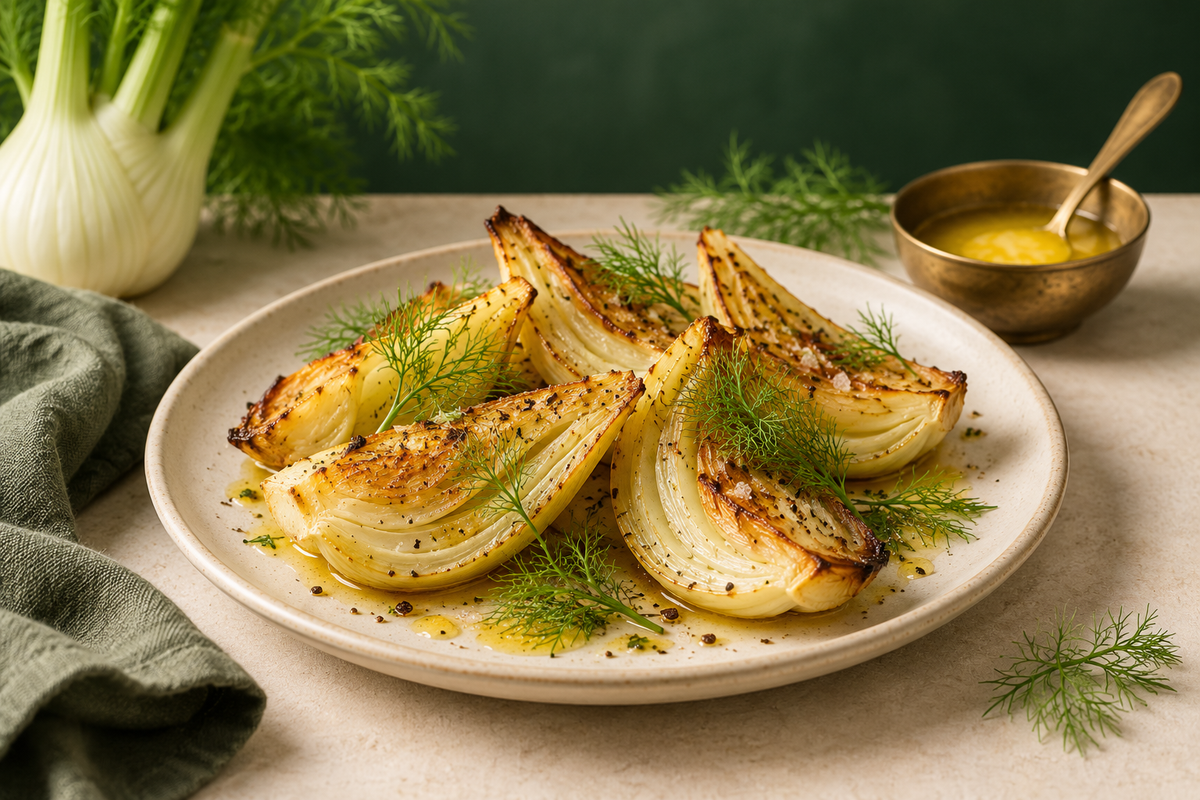
By Faimly Farm · 24 October 2026 · Prepared with AI assistance.
To roast fennel bulb with regular cow ghee, cut wedges through the root end, leave enough core to hold the layers together and test the thickest part for tenderness. A shallow, uncrowded tray lets you turn the wedges without breaking them into a pile of loose layers.
This proposed two-portion side dish uses fresh fennel bulb, not the dried fennel seeds commonly called saunf. It has not been kitchen-tested by Faimly Farm; use the timings as starting points and record how your oven and bulb size behave.
What to buy and prepare
Choose a fresh fennel bulb suitable for cooking. This method uses about 350–400 g after trimming. Remove the long stalks and any damaged or particularly tough outer material. Rinse the bulb and dry its surfaces. Keep a few clean fronds for an optional finishing garnish.
Cut the bulb in half vertically through the root end. Lay each half flat and divide it into three or four wedges. Slice away only the hard base needed for trimming; leave a small strip of core attached to each wedge. Cutting the entire core out at the start lets the layered pieces separate.
Ingredients
- 350–400 g trimmed fresh fennel bulb, cut into 6–8 wedges
- 12 g regular edible cow ghee, gently melted
- A small pinch of salt, adjusted at serving
- Black pepper to taste
- Optional: lemon juice and a few chopped fennel fronds after roasting
Use a shallow metal tray large enough to keep the wedges in one layer. Ghee is milk-derived; this is not a vegan or dairy-free recipe.
Roast and turn carefully
- Heat the oven to 200°C conventional or 180°C fan. Follow the tray manufacturer's temperature instructions.
- Put the dried wedges in a bowl. Add the melted ghee and salt, then turn gently to coat both cut faces. Avoid pulling the layers apart.
- Arrange on the tray with one cut face down and space between pieces. Keep the smaller wedges together so they can be removed sooner if needed.
- Roast for about 15 minutes, then inspect. When the underside has coloured, use a flat spatula to turn each wedge onto the other cut face.
- Continue for roughly 10–20 minutes, checking earlier for thin wedges. A knife should enter the thickest part without a hard, resistant centre. Colour alone is not the finishing test.
- Remove tender pieces as they finish. Add pepper, optional lemon and fronds after roasting, then serve promptly.
Handle uneven results
| What you see | What to do |
|---|---|
| Loose thin layers darken early | Lift them off the tray before they scorch. Next time retain more connecting core. |
| Brown face but firm centre | Lower the heat slightly and continue checking; cut more even wedges next time. |
| Little colour and moisture pooling | Check surface drying and tray crowding before adding more ghee. |
| Wedges break during turning | Slide a broad spatula underneath rather than pinching a single layer with tongs. |
Record trimmed weight, wedge count and actual cooking time. If the result needs adjustment, change wedge thickness or tray spacing first. Extra ghee does not correct a hard centre or a crowded tray.
Pair it with the rest of the meal
Use the wedges as a side beside dal, grains or your chosen main dish. Add a sauce on the plate if you want to keep the roasted surfaces distinct. Avoid calling this a detox food or assigning nutritional benefits from the ingredient name.
Common questions
Is fennel bulb the same ingredient as fennel seeds?
No. This recipe needs the fresh layered bulb. A spoon of dried seeds cannot replace its weight or texture.
Why do fennel wedges fall apart?
Removing the whole core or gripping loose layers can separate them. Retain a small connecting section and turn from underneath.
Can I double the tray quantity?
Use another tray or cook in batches if necessary. Keep the single layer and inspect each tray; do not simply double the time.
A matching Faimly Farm option
Faimly Farm sells Danedar Cow Ghee, a regular cow-ghee catalogue option for this recipe. Choose it according to your sourcing preference and the current label, not an assumed health or baking advantage. Check the selected pack on the live page; no price, stock or certification claim is made here.
Related reading
- Ghee-Roasted Cauliflower: Floret Size and Tray Space — compare the tray-space and vegetable-sizing principles.
- Broccoli with Regular Ghee: Steam Briefly, Then Finish in the Pan — use this related guide for the specific measurement or evidence distinction it covers.
- How to Measure Ghee for Recipes: Grams, Spoons and Scaling — use this related guide for the specific measurement or evidence distinction it covers.
Catalogue and related article records checked 24 October 2026. Featured image: AI-generated editorial illustration, not a photograph of actual packaging, a tested recipe or a verified batch. Browse the Faimly Farm Journal.
Continue reading
View all stories
Baking with A2 Ghee: Check the Paper Before Lining the Tray
Separate the recipe's fat from the liner's heat limits before preparing a baking tray.
Read the story
Cooking with Ghee in Enameled Cast Iron: Control the Heat
A manual-first guide to gradual heat and recipe fat in enameled cast iron, without borrowing instructions from a different cookware surface.
Read the story
Cooking with A2 Ghee in Cast Iron Is Different from Seasoning It
A manufacturer-based distinction between using ghee to cook food and choosing an oil for cast-iron seasoning and care.
Read the storyExplore Faimly Farm ghee


Join the conversation