



Keep the Ghee-Jar Spoon Separate from Cooking Utensils
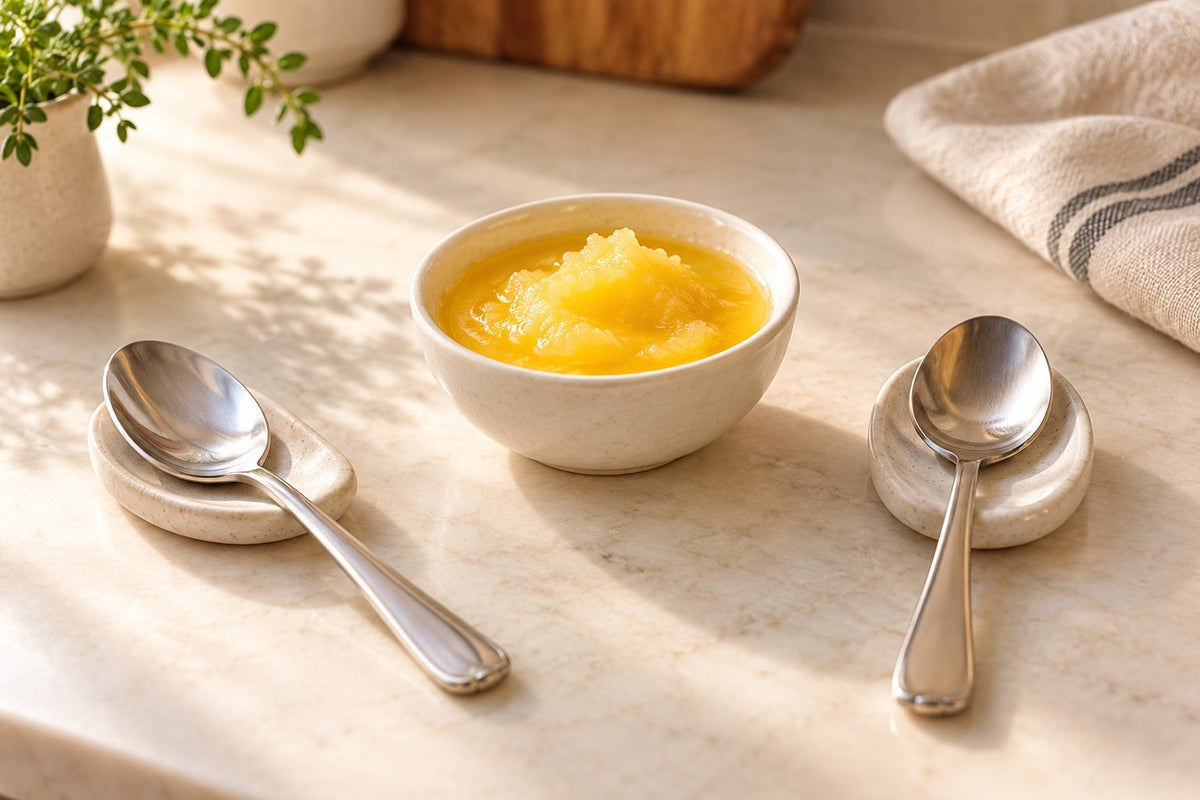
A simple utensil setup that keeps scooping ghee separate from handling raw ingredients and serving food.
By Faimly Farm · 23 October 2026 · Prepared with AI assistance.
Measure the ghee you need with a clean utensil before handling raw ingredients, then close and put away the jar. A spoon used to stir a pan or touch uncooked food should not become the jar spoon again without proper washing. This guide is about kitchen handling, not a health benefit of ghee.
Give the utensils three separate jobs
The jar spoon takes ghee from the container. The cooking utensil handles food in the pan. The serving utensil portions the finished dish. These roles are easy to confuse when everything rests on one saucer beside the hob.
Use separate clean rests, and place the jar spoon near the closed jar rather than beside the raw-food preparation area. A small bowl containing the measured amount makes it easier to finish cooking without reaching back into the jar.
Apply the clean-and-separate rule
FoodSafety.gov's clean-and-separate guidance recommends washing hands with soap and water for at least 20 seconds, washing utensils and surfaces with hot soapy water, and keeping utensils used for raw foods separate from those used for ready-to-eat food. Its advice includes raw meat, poultry, seafood, eggs and flour.
Applied to a ghee jar, that means a spoon that has touched raw ingredients should go to washing, not back into the container. Wash your hands after raw-food handling before touching clean utensils again. A quick wipe on a cloth is not the washing step described in that guidance.
A workable order for a busy meal
- Read the recipe and measure its ghee into a clean small bowl.
- Close the main jar and move it away from the raw-food work area.
- Prepare and cook with the utensils assigned to those tasks.
- If more ghee is needed, pause, wash your hands as appropriate and use a fresh clean jar utensil.
- Use clean serving utensils for the finished food.
This is an organisational routine built around the official hygiene principles. It is not a method for rescuing food that has already been contaminated. If raw-food residue has entered the jar, stop using it and seek product-specific food-safety advice rather than trying to make it safe by reheating it.
Make the arrangement obvious to other cooks
When two people share a kitchen, say which spoon belongs to the jar before cooking starts. Distinct handles or separate positions can make the roles easier to remember. A clean utensil is still needed when changing roles; colour coding alone does not clean anything.
For recipes using the regular range, Danedar Cow Ghee is the matching product reference. The hygiene routine does not depend on buying a particular ghee.
Quick questions
Can one spoon do all three jobs?
Only after appropriate washing between incompatible tasks. Keeping separate utensils ready is usually simpler during cooking.
Is this a milk-allergy procedure?
No. Milk-allergy requirements are a separate issue; see our shared-kitchen hosting guide before planning food for an allergic guest.
Browse Health & Wellness.
Article prepared with AI assistance. Banner: AI-generated editorial illustration, not a photograph of a product pack, kitchen test, official record or historical artefact. No firsthand testing is claimed. Visit the Faimly Farm Journal.
Continue reading
View all stories
A Preprint Cited for A2 Ghee: Check the Version Before Sharing
A practical way to distinguish an early research manuscript from its later publication.
Read the story
Before Sharing an A2 Ghee Study: Check for Corrections or Retraction
A practical check for updates to a cited research paper, with a record of the notice, its scope and the claim it affects.
Read the story
A Systematic Review in an A2 Ghee Article: What to Check
Check the question, foods studied, comparison and limits in a systematic review cited for A2 ghee. Includes a practical reading worksheet.
Read the storyExplore Faimly Farm ghee

Join the conversation