



Lactose-Free Ghee Claims: What to Verify on the Pack
Keep lactose intolerance, milk allergy and A2 sourcing separate. Learn which product information to check before relying on a lactose-free ghee claim.
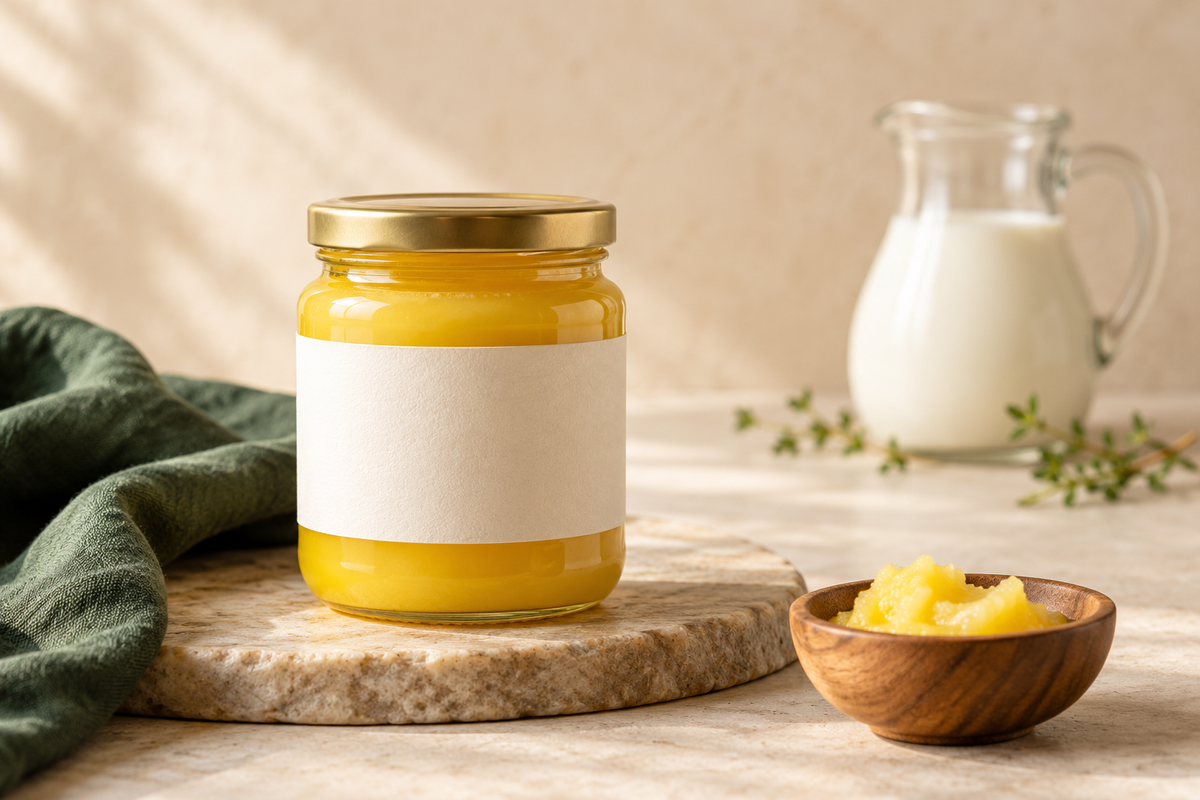
Do not assume a ghee is lactose-free because its label says A2, bilona or traditional. Check the specific product's claim and supporting information. Also keep lactose intolerance separate from milk allergy: a statement about lactose does not establish safety for someone allergic to milk.
This is a guide to reading claims, not an assurance that any particular ghee is suitable for a medical condition. The Faimly Farm product description reviewed for this article did not supply a product-specific lactose test result; this article therefore makes no lactose-free certification claim for it.
Lactose and milk protein are different
NIDDK explains that lactose intolerance concerns difficulty digesting the milk sugar lactose, while milk allergy involves an immune response to milk proteins. Allergic reactions can be serious. A low-lactose or lactose-free statement should not be interpreted as a milk-allergy clearance.
A2 is not a lactose measurement
An A2 sourcing description concerns a milk-protein variant, not a test result for milk sugar. Similarly, a description of curd churning tells you about a process; it does not state the measured lactose content of the finished batch. Keep the wording and the evidence in separate columns when comparing products.
A practical label-checking worksheet
| Check | Question |
|---|---|
| Exact wording | Does the pack actually say lactose-free, or is that a seller's informal description? |
| Product identity | Does the information refer to this exact product and variant? |
| Evidence | What testing or documentation supports the claim? |
| Allergen information | What does the pack say about milk and other allergens? |
| Your need | Are you checking lactose intolerance, milk allergy or another dietary requirement? |
Save a photograph of the actual pack if you need to ask the seller a question. A statement on an old screenshot may not describe the current product. Ask for clarification when the front label, ingredient list and online listing appear inconsistent.
Questions to send the producer
“Does this exact product carry a lactose-free claim? What evidence supports it, and how does that evidence relate to the current product or batch? Please share the allergen information separately.”
This request is deliberately specific. It avoids treating “no added milk” as equivalent to “contains no milk-derived material,” and it does not rely on colour, aroma or price.
Common questions
Can I test tolerance myself if I have a milk allergy?
Do not use this article as a reason to try a milk-derived food against allergy advice. Follow your clinician's avoidance plan.
Does everyone with lactose intolerance need the same diet?
No. NIDDK's dietary guidance notes that tolerance varies and recommends discussing dietary changes with a doctor or dietitian while maintaining adequate nutrition.
Can a laboratory report answer the question?
Only if its sample, test and result are relevant to the claim. Ask the laboratory or producer to explain the method and reporting limit rather than interpreting a generic purity certificate as a lactose result.
Related Faimly Farm guides
- Ghee Purity Reports: How to Read a Laboratory Test
- Bilona, A2 and Organic Ghee: What Each Label Means
Prepared by Faimly Farm with AI assistance, 15 October 2026. Banner: AI-generated illustration. General educational information; not individual medical advice.
For the separate task of preparing food for a guest who avoids milk, read Cooking for a Guest with Milk Allergy: Check Ghee Before Tempering. It covers ingredient checks, preparation handoffs and serving utensils; guidance for one dietary requirement does not establish suitability for another.
Continue reading
View all stories
Is Cultured Ghee Probiotic? What the Finished Product Must Show
Cultured does not automatically mean probiotic. Learn what live-culture, strain, amount and finished-product evidence a ghee probiotic claim needs.
Read the story
Cooking for a Guest with Milk Allergy: Check Ghee Before Tempering
Hosting someone with milk allergy? Check ghee in tempering, utensils and serving. A practical preparation checklist with FARE and NIDDK sources.
Read the story
Ghee in a Shared Dish: Estimate Its Contribution to Each Portion
Estimate ghee's contribution to a mixed dish using label values, total additions and portion weights. Understand uneven serving, leftovers and calculati...
Read the storyExplore Faimly Farm ghee


Join the conversation