



How to Make Ghee from Curd: A Practical Bilona Method Guide
Learn how to churn curd into butter and clarify it into ghee, with practical tips on separation, heat control, yield and storage.
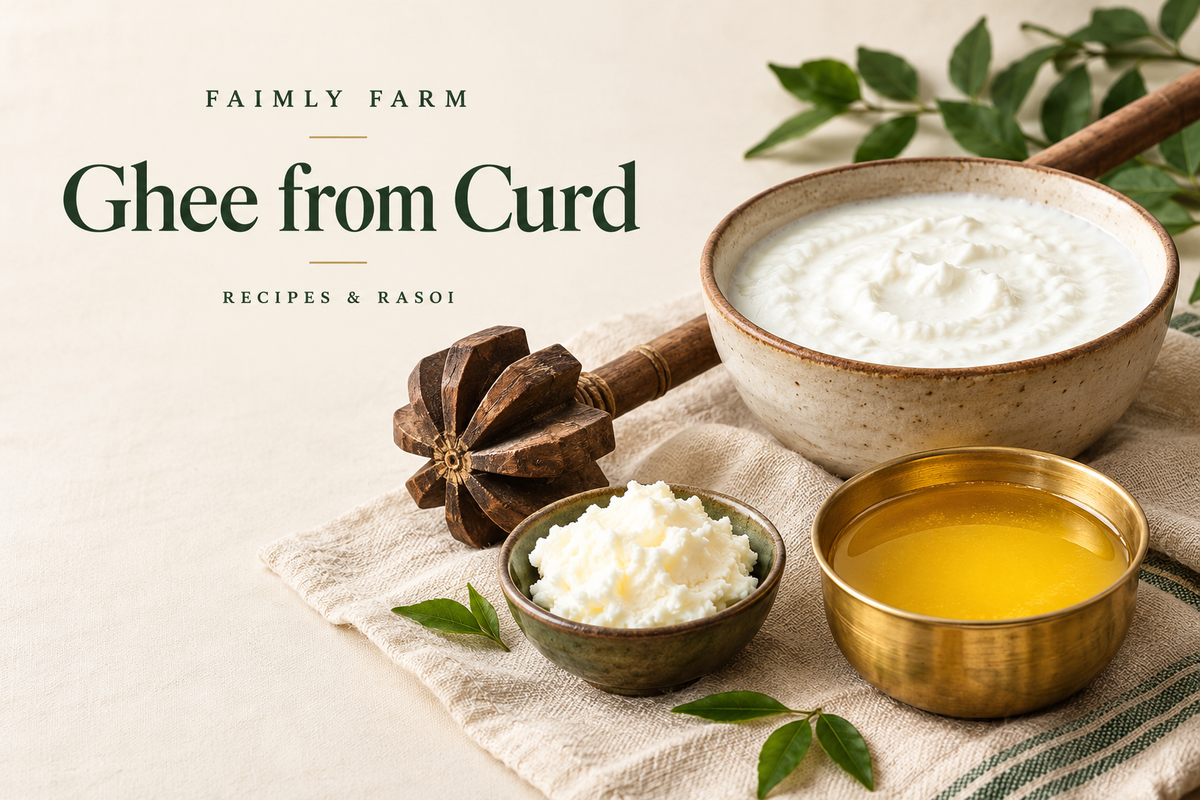
To make ghee from curd, first churn full-fat curd to separate butter, then gently heat that butter to remove moisture and separate the milk solids. Strain the clarified fat into a clean, dry container. This curd-to-butter-to-ghee route is the heart of the traditional bilona method.
If you have only made ghee from shop-bought butter or collected malai, starting with curd introduces an extra stage: churning. The reward is learning how a familiar ingredient moves from milk to dahi, makkhan and finally ghee.
What you will need
- About 2 litres of freshly set, full-fat curd, made from safely handled milk.
- Cool drinking water, added a little at a time if needed for churning.
- A clean wooden mathani or suitable butter churn.
- A deep vessel, heavy-bottomed saucepan, dry strainer and heat-safe jar.
This is a small learning batch, not a guaranteed jar yield. Low-fat curd and some homogenised products can make butter recovery difficult. Start with curd made from full-fat, non-homogenised milk where available.
Step 1: Prepare the curd
Use fresh curd with a clean, pleasantly sour smell. Keep it refrigerated until you are ready to work. Let very cold curd soften slightly so it can move freely under the churner. Do not use mouldy, discoloured or spoiled curd; turning it into ghee is not a way to rescue it.
Step 2: Churn until butter separates
Place the curd in a deep vessel with room for movement. Churn steadily, adding a small splash of cool drinking water if the mixture is too thick. Continue until small butter grains gather and the remaining liquid becomes thinner. Collect the butter with a clean spoon.
Temperature matters more than a fixed timer. If the mixture becomes warm and greasy, cool the vessel and resume gently. If it is too cold and stiff, let it soften briefly. Avoid prolonged high-speed blending that warms the mixture.
Step 3: Rinse and drain the butter
Rinse the collected butter gently with cool drinking water and drain well. This helps remove adhering buttermilk. Keep the butter cool and clarify it promptly. Refrigerate any buttermilk you intend to use separately.
Step 4: Clarify over gentle heat
Melt the butter in the heavy-bottomed pan over low heat. It will foam and bubble as moisture escapes. Watch closely as the liquid becomes clearer and milk solids collect at the base. Stir gently when needed to prevent sticking.
Stop heating when the solids are light golden-brown and the aroma is pleasantly nutty. Do not wait for black particles or an acrid smell. The hot pan continues cooking after you turn off the flame, so move it off the heat promptly.
Step 5: Strain, cool and store
Let the ghee cool enough to handle safely while it remains liquid, then strain into a completely dry, heat-safe jar. Allow it to cool before closing. Use a dry spoon each time and keep water out. Homemade batches vary in residual moisture, so do not assume they have the shelf life of a commercially packed product.
For the final separation step, see filtering homemade ghee: tools, sediment and careful handling. It explains stable equipment setup, slow draining and why filtration is not a purity or safety test.
Common questions
How much milk is required for 1 kg of bilona ghee?
There is no universal number. Milk fat percentage and how much fat you recover during churning determine the yield. Record the milk quantity and finished ghee weight for your own batch instead of relying on a fixed online claim.
Is malai ghee the same as curd-churned ghee?
Both can produce ghee, but the starting material differs. A whole-curd method churns cultured milk; a malai method starts with collected cream. Ask what was actually churned when comparing processes.
Does this method automatically make A2 ghee?
No. The method describes processing. An A2 sourcing claim concerns the milk used; a wooden churner alone cannot establish that origin.
For more background, read our bilona and direct-cream comparison. Prefer a ready-made option? Explore Faimly Farm Organica A2 Cow Ghee Bilona Churned and check the product page for current pack details.
Background reading: ICAR–NDRI Dairy Technology, which documents research on desi ghee manufacture from curd. This home guide is not a validated commercial production protocol.
Continue reading
View all stories
Peas Pulao with Ghee: Keeping the Grains Separate
A small stovetop peas pulao with measured water, frozen-pea guidance and texture troubleshooting.
Read the story
Scrambled Eggs with Ghee: Gentle Heat and Fully Set Curds
A two-egg recipe using measured ghee, gentle folding and controlled pan heat, with troubleshooting and clear egg-safety guidance.
Read the story
Ghee Cost per Recipe: A Kitchen Worksheet for Shared Meals
Calculate the ghee cost of a recipe and each portion using matching units, a worked example and a simple worksheet. Separate costing from nutrition.
Read the storyExplore Faimly Farm ghee


Join the conversation