


Seasonal Milk Stories on A2 Ghee: What Records Can Show
Evaluate seasonal milk stories on A2 ghee. Check dates, feeding scope and batch records before inferring origin or nutrient advantages.
By Faimly Farm, with AI assistance · Published 21 October 2026
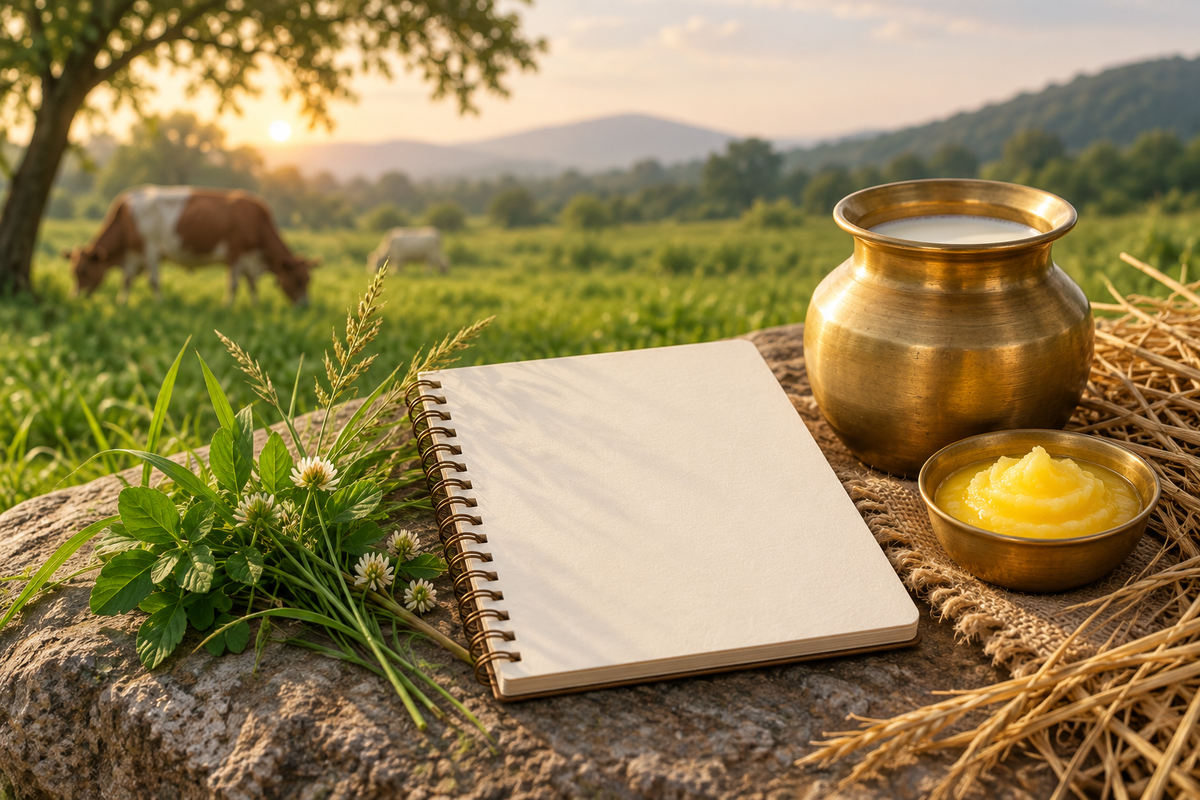
A seasonal milk story should identify the season, location, feeding description and evidence that connects it to the ghee being sold. A green field in a photograph does not show what every animal ate throughout the year, and a seasonal narrative does not establish a nutrient advantage.
This is a source-reading worksheet for A2-ghee shoppers. It does not claim that Faimly Farm uses a particular seasonal ration, supplies a single season exclusively or has measured seasonal nutrient differences.
Ask what “seasonal” actually modifies
The word may refer to milk collection, pasture availability, a production date, a limited product edition or a festival launch. Those are different statements. Copy the exact wording before asking for proof; otherwise you may investigate a claim the seller never made.
Ask for the relevant region and dates. “Monsoon batch” without a place or collection period is difficult to interpret. The date a jar was packed is also not automatically the date its source milk was collected.
Use a four-field note
| Field | What to record |
|---|---|
| Claim | The exact sentence on the listing or pack |
| Scope | Which animals, supplies, location and time period it covers |
| Evidence | Relevant dated records or explanation supplied |
| Batch link | How the explanation relates to the selected product or jar |
A hypothetical statement such as “these photographs show our pasture in July” is narrower than “all milk came from animals eating only fresh grass.” Preserve that distinction. Images can illustrate a place without documenting a complete feeding programme.
Keep feeding and nutrient claims separate
If a seller adds “therefore richer in vitamin X,” ask for relevant finished-product data and the comparison used. A feeding description does not supply a nutrition figure. A2 terminology is another distinct matter; it should not be inferred from green scenery or seasonal language.
Do not treat a changed colour or firmness in your kitchen as a test of diet, purity or source. Such observations can be recorded, but identifying their cause requires more information.
Compare usefulness, not story length
A concise, dated answer with a clear scope can be more useful than a long farm story. If the information is insufficient for a claim important to your purchase, ask once for clarification and decide whether another product offers the evidence you need. You do not have to fill missing details with a favourable assumption.
The Codex guidelines collection provides general traceability and food-information context. It does not certify any season, farm or Faimly Farm product.
Questions shoppers ask
Does a packing date identify the milk season?
Not by itself. Ask which dates the seasonal statement refers to.
Can I infer grass feeding from a field photo?
No. A photograph has a limited scope and cannot document a complete feeding history.
Does seasonal mean nutritionally superior?
No automatic superiority follows. A nutrient comparison needs relevant evidence.
What if the maker does not make a seasonal claim?
Do not invent one. Compare the information actually supplied.
Related Faimly Farm reading
- For parent buying evidence, read Pure A2 Ghee Buying Guide: How to Choose Genuine Ghee.
- For read source-story limits, read Reading a Farm Story: Separating Photographs from Traceability.
- For keep claim types separate, read Bilona, A2 and Organic Ghee: What Each Label Means.
Sources and links checked 21 October 2026. This is educational editorial content; examples and proposed recipes are identified in the text. Banner: AI-generated illustration, not an actual product or tested-batch photograph. Return to the Faimly Farm Journal.
Continue reading
View all stories
Made, Packed and Marketed By: Read the Roles on an A2 Ghee Label
Read named operator roles and ask about missing links without claiming an audit or certification.
Read the story
A Cow Breed Register and a Ghee Jar Answer Different Questions
Use official breed records for breed identity while keeping jar-level source evidence separate.
Read the story
Visiting a Ghee Farm: A2 Sourcing Questions Before and After
Prepare and record a farm visit while distinguishing observations, permission and batch evidence.
Read the story
Join the conversation