



Operation Flood and Butter Oil: Reading India's Dairy History
An introduction to butter oil's place in an official account of Operation Flood, with modern product claims kept in their own context.
By Faimly Farm · 23 October 2026 · Prepared with AI assistance.
Butter oil appears in the history of Operation Flood as part of the programme's financing; that reference is not a claim about a particular modern ghee brand. Reading the commodity name and the institutional story carefully helps connect dairy history with today's ingredient vocabulary.
What the official account records
The Government of India's Press Information Bureau account of the dairy sector, published 7 September 2022, describes the Anand Pattern as a cooperative structure linking village dairy societies, district unions and state marketing federations. It dates the start of Operation Flood to 1970.
That account identifies three phases: 1970–1980, 1981–1985 and 1985–1996. It says the first phase was financed by selling skimmed milk powder and butter oil donated by the European Economic Community through the World Food Programme. Later phases expanded the cooperative network and milk-handling infrastructure. The National Dairy Development Board's programme history is a further institutional source.
Why preserve the words “butter oil”?
The Codex food-category description for milkfat products discusses butter oil, anhydrous milkfat and ghee within the same category, while describing the products separately. Its description of ghee includes a developed flavour and physical structure.
For a historical note, preserve the commodity name used in the source rather than silently replacing “butter oil” with the name of a retail ghee product. Sharing a broad dairy-fat category does not establish identical processing, packaging or intended use in a particular transaction.
Read a programme history at the right scale
An account of a national programme describes institutions, dates and infrastructure. It does not supply the complete history of every household recipe or every producer. A family memory about making ghee and an official account of cooperative development can both be worth preserving, but they answer different questions.
If you are making a short family or community display, pair each statement with the source that supports it. Use the official account for the programme timeline; use an attributed family account for an individual's experience. Leave a gap where no evidence links the two. Do not invent a participating village, farmer or production story to make the narrative feel personal.
Where the present-day product reference fits
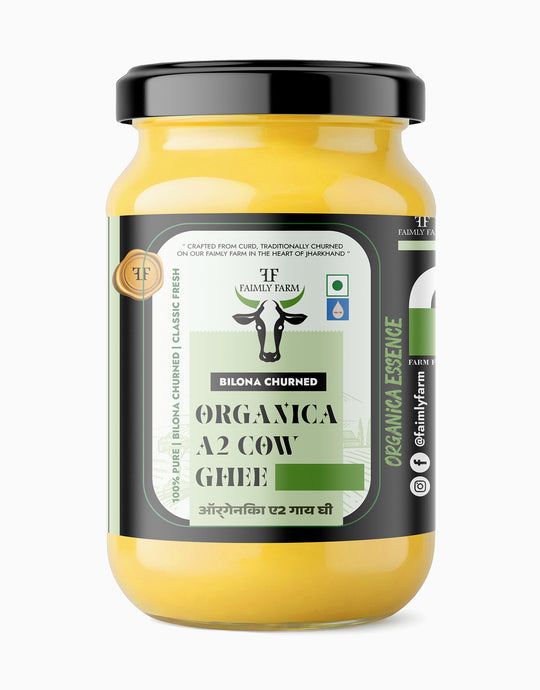
Organica A2 Cow Ghee Bilona Churned is a contemporary Faimly Farm A2 product. Its link here does not imply participation in Operation Flood, endorsement by the cited institutions or evidence of an A2 milk source for the programme's historical commodities.
Quick questions
Does this history establish that all ghee was made one way?
No. The cited passage concerns a programme and its financing, not a universal household production method.
Can I label an archival milk-can image as a Faimly Farm farm?
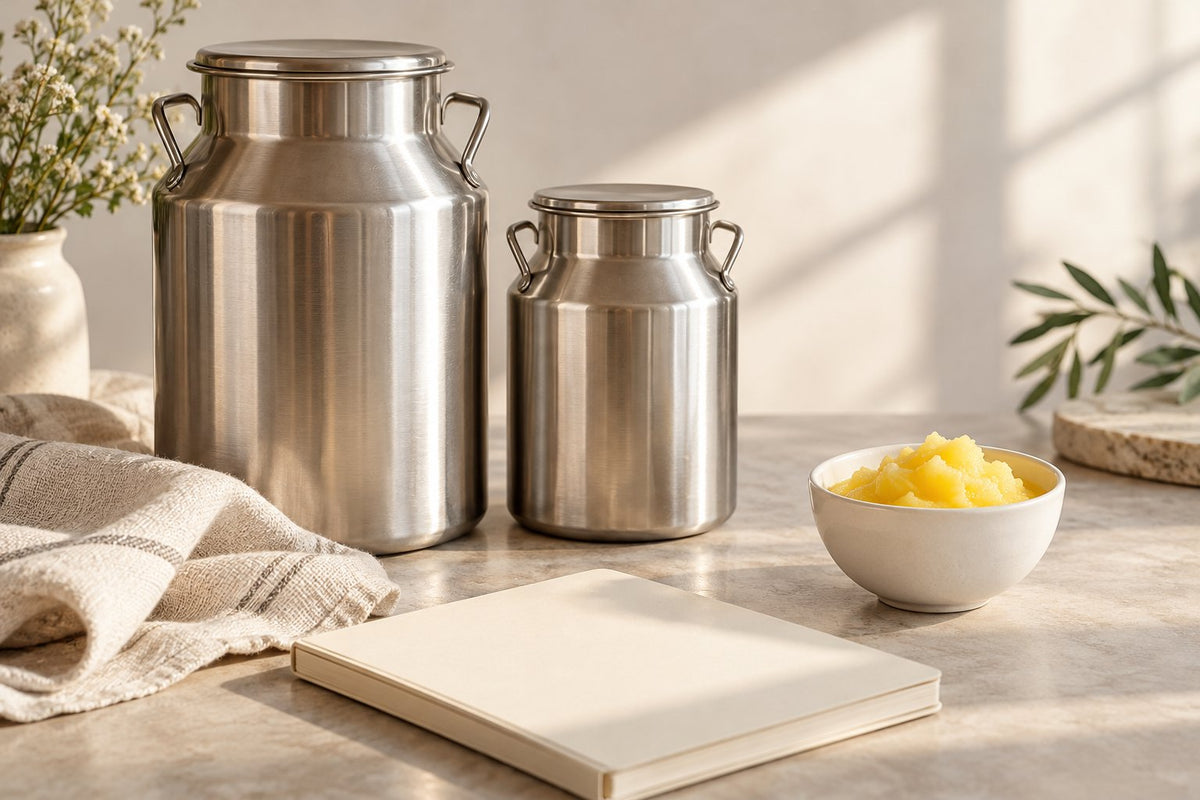
No. Identify the image's actual source and subject. The banner here is a contemporary illustration.
For another example of careful source reading, see ghee in an 1889 cookbook. Browse Heritage & Society.
Article prepared with AI assistance. Banner: AI-generated editorial illustration, not a photograph of a kitchen test, product pack, real production batch or historical event. No firsthand testing is claimed. Visit the Faimly Farm Journal.
Continue reading
View all stories
Choosing a Museum Image for a Ghee Recipe Book: Check the Actual Reuse Terms
An editorial checklist for choosing a museum image, using The Met's published Open Access policy as a specific example.
Read the story
Reading Milk, Curd and Ghee in an 1826 Krishna Drawing Record
A focused reading of a museum catalogue record, showing how to preserve attribution and uncertainty when discussing ghee in heritage.
Read the story
Living Food Heritage: Pass On the Skill Behind a Ghee Recipe
A family recipe archive can support learning as well as storage. Start with one skill someone wants to practise and keep its attribution clear.
Read the storyExplore Faimly Farm ghee
Join the conversation